3.19.2007

EduBlogs, revisited

I'd like to refer you to my previous post on blogging in education.

The Beauty of EduBlogs-April 7, 2006

Now I'd like to ironically share that last week I attended a training (sponsored by my district) on how to use blogs, wikis, and podcasts in education. Nearly one year after my post, all of my predictions about this new technology tool have come to fruition. I'm not saying I've earned a prophet star or anything. It is just frustrating that even I in my feeble mind could see this coming a mile away and still we were afraid to use it. My point here is that we have wasted precious time with perfecting the use of blogs in education, and we'll waste even more the next time some hot new thing comes along. Will we ever learn?
Share/Bookmark

The Higher Power of Lucky by Susan Patron


The 2007 Newbery Winner came out swinging when it was immediately blacklisted in some school libraries for its casual use of the word "scrotum" on the first page. I read a little about it, saw the sample in which the word was used in context, and wanted to see what all the fuss was about. I read it, and here's what I think.

As far as the controversy, here's the deal...
On page 1, Lucky (a 10-year-old girl) is eavesdropping on an AA group meeting and hears a guy known as Short Sammy talking about the day he hit rock bottom and decided to clean up his life. On that fateful day, Sammy was sitting in his truck getting all liquored up when a rattlesnake crawled into his passenger seat and tried to attack. Sammy was saved by his dog, but during the ensuing battle, the dog was bitten on the scrotum. When she hears it, Lucky doesn't even know what it means. It doesn't come up again until page 6, when she wonders to herself what a scrotum is and decides that "it sounded like something green that comes up when you have the flu and cough too much. It sounded medical and secret, but also important, and Lucky was glad she was a girl and would never have such an aspect as a scrotum on her own body."
I don't care who you are, that's funny!

Only once does the word come up again, and only when Lucky is asking her guardian to explain it, who does so in a matter of fact and technical way that satisfies Lucky's curiousity and puts an end to her wonderings....

So honestly, what's the big deal?

First of all, from what I have read, the only fuss (and there is quite a bit of it) about this libro is that it contains the word scrotum. It seems sad to ignore the remainder of the content just because of one word! Second of all, keep in mind, people, that the John Newbery Medal is presented to the most distinguished piece of literature for children published the previous year. Books are evaluated on interpretation of the theme or concept, presentation of information including accuracy, clarity and organization, development of plot, delineation of characters, delineation of setting, and appropriateness of style.
Books that receive this award are intended for older children. (Previous books receiving this prestigious award include: The Giver, Holes, A Year Down Yonder, Number the Stars, The Whipping Boy, Bridge to Terabithia, and Sounder....anybody who knows anything about any of these books will know they aren't sweet stories to share with little ones.) I could see cause for concern if 6-year-olds were reading this book, but since it is written on nearly a 6th grade level, I think those kids can handle the author's use of the word here. Also, when you evaluate the work as a whole, it is not about one tiny little word! The book is about Lucky's path in dealing with some major events in her life, including her mother's death and her father's abandonment of her. The recurring theme is change and learing what makes you, you. I like it, a lot! I think this book would be a great choice for student book clubs and discussion groups. Know that there will obviously be a slight distraction as the kids giggle over "the word," but they'll get over it just as quickly as Lucky does.

Share/Bookmark

3.16.2007

I'm Back, Baby!

I am ecstatic that I now actually have access to my blogspot site once again!

More to come...
Share/Bookmark

7.24.2006

Blogs as War Diaries

The New York Times featured an article today by Tom Zeller, Jr. titled "Anne Frank 2006: War Diaries Online." It discusses how bloggers in Israel and Lebanon are maintaining sites that are documenting the progression of the conflict. The opening of the article touches on the impact that Anne Frank's and Zlata Filopovic's (victim of the Bosnian war in Sarajevo) diaries had and continue to have on people's lives. Both of the girls' heartfelt -and at times, desperate- diary entries later revealed details of the life in a war zone. (I read Zlata's Diary in graduate school, and the book was one of the 2 non-fiction books that I would say greatly affected me.) Zeller then discusses the prevalence and possible impacts of online war diaries about the war in Israel.

I checked out a few of the featured sites, researched others, and have listed the most useful of what I found below. The authors are getting hundreds of comments on each post, and some pretty interesting conversations are taking place. This "conflict" is extremely significant to the rest of the world, but these blogs will help remind us of what those people are experiencing on a daily basis with rockets, missiles, and gunfire falling like rain.


War-Related Links:
-Blogging Beirut
-Video Clip of Missile Attack
-Manamania
-Video Clip of Air Siren Alarms
-Damage in Galilee
-Blogs of War
-Jerusalem Post
-The Captain's Journal
-Israellycool.com
-Morning Coffee
-Lebanon's The Daily Star

For more information on Zlata Filopovic:
Teachers' Bookzone
American Library Association
Zlata's Diary
Share/Bookmark

7.13.2006

What's so Special About TKAM?

I’ve been told I have an obsession with To Kill a Mockingbird. Actually, I prefer the term “passionate enthusiast,” and I do indeed hold this great novel in very high regard. In case of a house fire, Matt knows he better get the wedding pics because I’m going for my signed copy of the 40th anniversary edition. The book is just that good. In his biography of Nelle Harper Lee, Charles J. Shields shares that To Kill a Mockingbird is cited as being the second most influential book on people’s lives. (The first most influential book? The Bible.) My first experience with TKAM was in my freshman year of high school, and with a very gifted instructor. Coming from a very small part of the world where people’s minds were also very small, race relations and prejudice weren’t discussed- they just “were.” I saw rebel flag-toting sons of KKK members participate in class discussions in which they realized the maltreatment of Tom Robinson and sympathized with his character. It was a very powerful learning experience that moves me even now. Even if you strip away all of the other funny stories, the mystery of Boo Radley, the witty dialogue from the most precocious Jean Louise, the beautiful imagery, and the perfect snapshot of southern culture, the story of Tom Robinson alone is powerful enough. But the other stuff is what takes the novel from being a good story to being a timeless classic.

Every time I read it/listen to it/watch the movie/etc. I notice some new thing and I love Lee's book that much more. Recently, I visited the Alabama Shakespeare Festival in Montgomery, Alabama to see the play (based, of course, on the book by Harper Lee and adapted by Christopher Sergel). With few exceptions, the players embodied their characters very well. While the play is by no means a substitution for the book itself, it is a great supplement to gathering a more complete understanding of the story.

As a librarian my philosophy is that there is a book for everyone. People have different tastes, needs, attention spans, and preferences, and it is because of such diversity that so many options exist in reading material. This is a pretty bold statement, but I feel very strongly that there is exactly one novel that carries a message from which all readers (circa age 14 and up) can benefit, and that book is To Kill a Mockingbird.
Share/Bookmark

7.11.2006

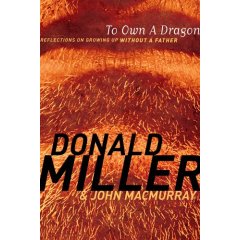
To Own a Dragon by Donald Miller


Donald Miller is the founder of the Belmont Foundation, which focuses on providing mentors for young people who need them. His involvement in this organization no doubt stems from his own lack of a father during childhood. Donald Miller shares his thoughts about those years and how they have affected him even into adulthood in his latest book, titled To Own a Dragon. The book is intended for those growing up without a father, and it is good advice interacting with boys and young men who are growing up without a father’s positive influence.

Miller approaches this weighty topic with an open and very honest approach. His writing style is perfectly humorous, deeply insightful, clever, and simple all at once. There are too many prolific thoughts to mention here, but the chapters on the Lord’s Prayer, education, and work ethic were my favorites.
For more on Donald Miller:
Donald Miller Official Site
The Belmont Foundation
Blue Like Jazz
Interview with the Author
Share/Bookmark

7.03.2006

Mockingbird: A Portrait of Harper Lee


On June 12, the Alabama Booksmith, a Birmingham hot spot for locating first editions, held a signing for Mockingbird. Author Charles J. Shields signed many copies of his latest work of non-fiction. Preferring fiction, I selected this book only for its subject: Nelle Harper Lee. I went into it with limited (and mostly false) prior knowledge of the author of the greatest novel ever written. I had heard that Harper Lee was reclusive, that she lived in New York, and that there were nasty rumors that she didn’t even write the book at all, but that her childhood friend Truman Capote did. I also knew that she had never published another book following To Kill a Mockingbird, but not why.


Shields’s book did not disappoint. There is so much information packed into its 285 pages and additional 34 pages of carefully documented footnotes that it would require multiple readings to truly digest. While Shields is clear that he has never able to get any direct information from Harper Lee herself, he does a fabulous job of painting a picture of her life thus far while respecting the clear boundaries set by Miss Lee and her hometown of Monroeville, Alabama. Here is a condensed list of the surprises contained within Mockingbird:

-She actually goes by Nelle Lee.

-She was a member of a sorority (Chi Omega) during her 2 years at the University of Alabama in Tuscaloosa.

-Her mother suffered mentally from a condition not disclosed.

-Her father, A.C. Lee was indeed the model for Atticus Finch. However, A.C. was very hesitant to join the ranks in the fight for social equity. As a matter of fact, Reverend Ray Whatley, minister of the First United Methodist Church in Monroeville, documented that A.C. approached him after a sermon that included statements on racial equality one Sunday morning to tell him that he needed to “get off the ‘social justice’ and back on the gospel.” (page 123)

It helps to know that eventually, A.C. did in fact become a leader in equal treatment of blacks and whites.

-She lives in Monroeville mostly from October to May, and in New York during the summer months. According to vignettes from Monroeville residents, the locals guard her privacy very carefully and protect her from nosy, invasive reporters.

-It was not Capote who was slighted by being deprived of recognition for helping write To Kill a Mockingbird, but rather Lee who was hurt by Capote’s failure to acknowledge all of her help with In Cold Blood (a documentation of the investigation and trial of the murders of a Kansas family). From everything mentioned regarding Capote, Nelle Lee is a precious person worthy of praise for putting up with his antics. The next biography I undertake will likely be one about Truman Capote (nah-I’ll probably just watch the movie!), but from what is mentioned about him in this book, he was a horribly selfish and attention-seeking man. If he had anything to do with To Kill a Mockingbird, he would have shouted it from the rooftops. The fact that he never did anything at all on Nelle’s behalf to dispel the rumors that he wrote To Kill a Mockingbird, and therefore to eliminate speculation, only further illustrates how self-centered he was.

There are two different aspects of this book that call for deeper thought:

1. The title-I think Shields named the book Mockingbird to indicate a similarity between Nelle Lee and Boo Radley.

2. Additional books- From everything Shields was able to gather about Nelle, it is very plain that she is a writer. Writers must write. I am convinced that somewhere safe, Nelle Harper Lee has several finished manuscripts that await posthumous publication. The worst fear of an author who has accomplished what Nelle Harper Lee did- on her first try- is that everything else will fall short. Nelle Harper Lee still writes, and one day we will be able to read it.


Share/Bookmark

4.17.2006

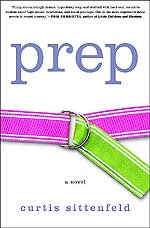
Prep


Recently I conquered Prep by Curtis Sittenfeld by listening to the unabridged audio version (a whopping 15 CD’s). Lee narrates her experiences of self-discovery, exciting teenage drama, and surviving bad choices during her four years at Ault Preparatory School. Like many high school girls, Lee is painfully self-conscious, which causes her to describe every incidence with family, teachers, and friends, every event, and every conversation (regardless of significance) in extreme emotional and psychological detail.

Lee keeps her scrutiny of the student body of her prep school to herself until she is interviewed by a reporter from the New York Times, who capitalizes on Lee’s mistake of sharing a little too much about Ault. It is ironic that Lee nearly makes it all the way through Ault completely unnoticed and in the last month of her senior year she is unfavorably exposed by her experiences of being unnoticed. This version provides a very interesting “ten years later” follow-up of some of the major characters, which gives necessary closure to the story.

Because Lee is a highly analytical teenage girl, this book can be very valuable in providing insight into the adolescent psyche. There is one moment of particular interest to educators. In Lee’s sophomore year she has a teacher who really thinks she has Lee’s personality and student work ethic pegged, when in reality she couldn’t be more wrong. The way Lee feels in that moment serves as a reminder to me as a teacher that I don’t always know everything about my students. In my library, I have little cardboard stands that display the number of each table. Sometimes when I am tidying up, I see where my kids have written their names or drawn pictures on the cardboard stands and I always wonder, When did they have time to do that? They are busy from the time they sit down until the time they leave. I just think I know what is going on in the room. I don’t really. Not at all. The implication for all of us is that there is significance in recognizing that at any given moment there are so many other events occurring in a classroom prior to, during, and following instruction that we simply don’t have a clue about. I do wonder whether increasing our awareness of these side-shows would increase our understanding of kids and therefore our effectiveness in reaching their minds.
Share/Bookmark

4.07.2006

The Beauty of EduBlogs

If it is enigmatic to answer a question with a question, what then is it to blog about blogging?

I’ve had some thoughts swirling around in my head over the past several months about the opportunities for use of web logs in education. Blogs (and social networks that call themselves blogs but aren’t really->see previous tech posting) have become immensely popular over the past 2 years. It began as a trend with young adults, then filtered down to colleges, then to teenagers, and now even to middle schoolers. They love them, they post several times daily, and for crying out loud they are excited about writing and then reading what their peers are posting. Do you realize what this means? Willful creative composition, drafting, revising, editing, publishing. The best part? They do it for fun.

Stop the presses.

Someone please tell me why we aren’t using this in schools? Many of the most commonly used blog-wares are currently blocked in my school system via network filters set at the central office. Yeah, yeah, yeah, I get that some of these kids are using their blogs or MySpace accounts to gossip and in the worst cases, cyber-bully others. I’m neither denoting that fact nor demeaning the power of public slander in the life of a student. As a matter of fact, initially I almost understood the ban because it is our foremost responsibility to protect our children. But as the potential for blogs continues to grow, I am convinced that the benefits far outweigh the disadvantages. We shouldn’t be afraid of this new technology that can be so great for the students for whose instruction we are also responsible. If their education can be enhanced by utilizing it, then we owe it to them to try.

You know, when the internet became a big thing, educators were afraid of it. “They’ll see trash!” we cried. “They’ll play games!” we protested. “What good is this www, anyway? None of that information is reliable!” There’s this silly little cycle. Whenever something is new, we fight it. We protest, we cry, we make lists of all the reasons it just won't work, we bang our fists on the floor, and we are dragged kicking and screaming (led by the kids, most times) into the future. Then after our tantrum and after we recover from the paralyzing fear over what will go wrong, finally, as a last resort, we figure out how to modify the new thing into something that is useful. We taught them (with relative success) to stay away from the smut, to evaluate their sources, and to play games in their free time. We’ll teach them to blog responsibly, too.

I’m telling you right now, people, mark my words. Blogging is here to stay, and its uses will only continue to multiply. Don’t pass out at the following suggestion, but why don’t we embrace it this time (gasp)? Frankly, I think we need to take advantage of this tool before the powers that be catch on and start making us pay for it!

I most assuredly believe that the use of web logs can be an invaluable tool in teaching the writing process (how exciting will it be for students to see their very own words published on the web?!), and easily integrated across the curriculum. This newfangled (did I mention FREE?!) technology is a beautiful tool, full of potential for our kids; but as we all know so very well, beauty is in the eye of the beholder.

Share/Bookmark

Memoirs of a Geisha revisited


Share/Bookmark