

4.07.2006


3.26.2006
Tech Talk

I recently attended an educational technology conference in Orlando, and wanted to throw in a few tips about some up and coming school-related technologies.
- If you don't know already, iPods are pretty much here to stay. Once thought to be the latest fad which would quickly be replaced by bigger and better tech toys, the iPod has firmly established its relevance to the world in general, and specifically in the world of education. Its uses multiply regularly. Bottom line: if you don't have one, get one.
- System integration systems are quickly becoming an actuality for school districts. For brief clarification, most schools currently use a collection of softwares to manage student information, library circulation, cafeteria accounts, and standardized test data. These system integration systems I’m talking about here are single softwares that bring them all together into one nice little accessible package. From what I can tell, we remain in the “bleeding edge” stages of working out the kinks, but it’s good to know that what was once thought an unattainable goal is quickly becoming a reality.
- There were several exhibits advertising web-based professional development courses. From graduate degree programs to trainings on software applications such as Microsoft Word, online courses are definitely becoming increasingly prevalent.
- SanDisk, a leading distributor of USB flash drives, will soon be releasing the Cruzer Freedom. Designed specifically for students, the Cruzer Freedom is a more rugged drive with the unique feature of partitioned, protected memory that allows the safe storage and sharing of copyrighted material (such as textbooks, novels, study aids, learning tools, etc.). SanDisk advertises the Cruzer Freedom as a digital backpack.
- Live Ink is a reading intervention software for middle and high school students that alters the format of text on a page to make word and letter combinations easier to comprehend. It employs word patterns and grouping as opposed to traditional block text to improve reading comprehension, content mastery, and retention of information.
- There is a nation-wide push for 1:1 student/computer ratios in schools. This includes handhelds, tablet PC’s, laptops, and good ol’ desktops. To that I say: we can dream, can’t we?
- This will not come as a surprise to many of you, but the MySpace social network (dubbed a blog, but does not truly measure up to the true description) is now the #1 source of victims for pedophiles. There are a lot of kids and parents who think it is harmless. Share this information with them and show them how to have a MySpace account without revealing personal information.
- Professional portfolios for educators have long been a useful way for potential employers to gain insight into applicants' experience in and out of the classroom. Electronic portfolios have also long had a place in the form of disks (and more recently, USB flash drives). Currently the trend has shifted toward using blogs for the design of e-portfolios. Some free blog sites are www.blogger.com and www.livejournal.com.
- Tablets (laptops that have a rotating screen that you can lay flat and – using a stylus- actually handwrite notes that a software will translate to text) are one of the newest types of PC’s that are becoming very popular with college and high school students. I personally have mixed feelings about them because: 1) Kids today are proficient typers by 3rd grade. They can type faster than they can write! Looking at it this way, it seems like we’re taking a step backward. 2) Any computer that you write directly on will probably need lots of maintenance. Even with a screen protecting film, regular use of the tablet feature will wear down faster than a plain jane laptop. AND 3) The handwriting-text conversion feature excludes kids who have poor handwriting. If the software can’t recognize the markings, it won’t translate the student’s thoughts correctly. Like I said, we have a long way to go with this particular technology. Since they are increasingly popular, however, I felt them worth mentioning.
- Last but certainly not least is a somewhat older software (well-only about a year old, but that is considered old in the tech world!) being distributed by Scholastic called Scholastic Keys for Microsoft Office. Install this to a workstation that already has MS Office on it, and it works as a simplification of the regular products. I can easily see it as having significant value in the classroom, and even as a training tool for some tech-a-phobic teachers!
Quote of note:
"The real problem is not whether machines think but whether men do." ~B.F. Skinner, Contingencies of Reinforcement, 1969
Clements does it again!
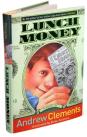
As both a classroom teacher and a librarian, Andrew Clements is one of my all-time favorite authors. It is true that pretty much all of his books follow the same “kid conquering the world” format, but they’re still great reads nonetheless. Lunch Money is his newest. It’s the story of money-hungry 5th grader Greg who discovers a gold mine in selling homemade comic books. Greg’s success meets some definite challenges from both authority figures and competitors, but in the end he is able to continue his work and learns the value of principles as well. Clements has produced yet another real winner! This one is great for inspiring kids to get off their keisters and DO something.
The Mermaid Chair

Despite the intended purpose of this blog (discussing literature related to education), I have to include one that is just a good, plain, brain-break read. Sue Monk Kidd is the author of The Secret Life of Bees, which IS a young adult novel, and a new favorite of mine. Her newest work is The Mermaid Chair, and is the story of a middle-aged woman struggling to regain her sense of self after devoting the larger portion of her life to her family. There are a few intriguing turns of events that lead to her self-discovery, including traveling back home to take care of her mother who has a scary habit of chopping off her fingers (yeah, I know) and falling in love with a Benedictine monk (yeah, I KNOW!).
Caution: once you begin this book, you will be consumed with it until its conclusion. Do not attempt to read it if you have an important event or deadline looming. Save it for the beach!
Flush

Enjoying a much-needed break from the daily bump and grind, I have consumed several great books this week. One was Flush by Carl Hiaasen, a young adult novel. Set in the Florida Keys, the drama begins when teenager Noah goes to visit his recently imprisoned father (Paine), who is being punished for sinking one of the local casino boats. Being an advocate for the environment, Paine clams that the owner of the boat has been dumping raw sewage from the casino into the water, and his solution was to get rid of the source by sinking the boat. What follows is an interesting (though fairly predictable) series of events that eventually lead to the conviction of the casino owner. There are a few questionable holes in the plot, such as why would an eco-freak exacerbate an already poor situation for nature by pouring oil, gasoline, and other harmful waste products into the water by sinking a boat?
As I read this book, a random thought kept tickling the back of my brain. Now I want to explore this thought a little further and welcome anyone to weigh in on my little theory. As I read, I was struck with how closely Flush resembled To Kill a Mockingbird by Harper Lee (which, by the way, if you have not read, run- do not walk- to your local library immediately to get it!). My theory is supported by the following points:
1. It is set in the author’s home town, written with the intention of exposing dark secrets to the light of public knowledge.
2. The story is drenched with descriptions of the culture of that area, which is essential to the plot.
3. The main character’s family is ostracized and the children feel it necessary to defend their father, who has gone “against the grain” to act upon his convictions.
4. There is a mysterious secret hero who watches over the children and ultimately is their rescuer in times of danger.
Overall, despite the blatantly authoritarian liberties Hiaasen takes with directing the plot, the book serves a nice purpose of attempting to increase awareness of protecting our aqua ecosystems. Consider it highly recommended for mature students in grades 5 and up. Be forewarned, however, that towards the end of the book there are surprising and abrupt (and completely unnecessary) uses of profanity.
2.21.2006
Intrinsic Motivation?

Today I was among a group of educators who discussed the following question:
What kinds of classroom practices tend to extinguish intrinsic motivation? What kinds of problems might you encounter if you tried to eliminate such practices?
Educators know that intrinsic motivation is the inner desire or motivation to accomplish a task or fulfill an expected behavior. Its role in the learning process is vital because kids come to us with a spark of desire to learn and part of our job as we pass those minds from one classroom to the next is to fan that flame. The greatest teachers are able to pour gasoline on it.
Our supreme desire is to have a room full of students who are eager to be there and gobble up whatever crumbs of wisdom you throw their way. To be frank, it doesn’t happen. Ever. The interesting question there is why? What is it that we do to kids over time that takes away their yearnin’ for learnin’? Some thought that perhaps it was all of the paper-and-pencil activities that we require of students. Lower-level thinking lessons encourage kids to be low-level thinkers. I agree with that. I also think that we reward children for every little thing they do, and that takes away from wanting to do something just because it’s a good thing to do.
“Lawanda brought her permission slip back for the field trip signed. Here’s a piece of candy.”
“Gabe raised his hand to answer a question. Pick something from the treasure chest.”
“Hannah won the review game for our quiz tomorrow. 5 bonus points to Hannah!”
Now, don’t get me wrong. I’m not demonizing rewards, because they do play an important role in motivating students. But too many students today, when asked to complete a task, ask the question “Well, what do I get?” That is when a person’s intrinsic motivation has been tainted and extrinsic motivation supercedes.
2.19.2006
Memoirs of a Geisha

Being a firm believer in experiencing a story in the form of its original intent (i.e. if it was first written as a book, I want to read the book), Memoirs of a Geisha by Arthur Golden has been on my must-read list for quite some time. Finally I was able to check it off!
I’ll admit, I loved the book because it was so, well, different. At the same time, it’s difficult to blog about because there are so many different topics one could tackle. Gender roles, economics, culture, love, and war are only a few different elements that are vital to this story.
The book is unique in that there is nothing in our American culture with which to compare the geisha of Japan. They aren’t really prostitutes, yet their virginity is given to the highest bidder. This description of a successful geisha’s life was filled to the brim with irony. The girls who are “lucky” enough to become geisha are trapped by their profession while simultaneously are grateful for a means to some degree of independence.
What was incredibly bothersome was that in addition to this being a recounting of the life of a geisha, it was also intended as a love story. Yet, the entire story (including the sprinklings of sexual encounters) had nothing whatsoever to do with love. There was no talk of love, no mention of the word. Chiyo/Sayuri (the main character) never mentions love at all, neither in relation to her family nor to the men for whom she grows to have strong feelings.
It makes me wonder whether people are taught to love or whether they have the ability to do so inherently. In our culture people talk of love from the time our babies are newborns. By the age of 5, kids know even that there are different types of love. Would they know these things without our lavishing it upon them? Something to think about…
*April 7, 2006 addition: I finally watched the movie! While the theatrical presentation deviated from the original manuscript, it was still a pretty good represention. It actually helped me understand the life of a geisha a little more. I will concede this: the movie version does a better job of contrasting the Japanese and American cultures in the 1930's. I found myself wishing the people of our country were as graceful and dignified as the Japanese people. Still, I maintain that you should definitely read the book before watching the movie!
1.19.2006
How and Why
Being involved in an intricate web of book-lovers, the best of what we encounter is always passed on to another who will appreciate it. Recently a pal sent me A Child Called It by David Pelzer as one of these note-worthy books.
On second thought, “note-worthy” does not even begin to describe this childlike description of what turned out to be one of the worst child abuse cases in California history. Thankfully, Pelzer begins the book by revealing that there was indeed a happy ending. Otherwise, the heart-wrenching experience of reading about what happened to this poor innocent human being would have been even more frightful. Pelzer describes, in horrific detail, the abuse he experienced growing up. My knowledge of child abuse is limited (though assuredly existent-have I ever mentioned I teach in a public school?!), but what really got to me was how in the world Pelzer’s mother came up with the tortures she inflicted upon her son… her son, for crying out loud!
I discovered that there are 2 additional parts that make up Dave Pelzer’s trilogy, and they have just been bumped to the top of my “To Read” list! While I was content knowing that Pelzer survived and was eventually removed from his home, there are unanswered questions burning in my mind.
-Out of 5 sons, why did his mother abuse him alone?
-Where is the mother now? Does he have a relationship with her? What about his father and all his brothers, the ones who were hateful to him as well?
-Has he ever gone back to tell Shirley (his mother’s friend that was apparently the only person to confront her about her treatment of David) what happened?
-What kind of therapy does one have to undergo to get past such experience?
-How has this affected him in his adult life, specifically in his role as father.
-This may seem off the subject, but I noticed that in the author profile at the end of the book, Pelzer names his son and even their pets, but mentions his wife only as “my wife.” Why? Is that significant at all?
I am sure that most or all of these concerns will be answered when I read the other 2 books, but for the time being I am left with absolute disgust and wonder over how in the world someone could do this to their child.
On second thought, “note-worthy” does not even begin to describe this childlike description of what turned out to be one of the worst child abuse cases in California history. Thankfully, Pelzer begins the book by revealing that there was indeed a happy ending. Otherwise, the heart-wrenching experience of reading about what happened to this poor innocent human being would have been even more frightful. Pelzer describes, in horrific detail, the abuse he experienced growing up. My knowledge of child abuse is limited (though assuredly existent-have I ever mentioned I teach in a public school?!), but what really got to me was how in the world Pelzer’s mother came up with the tortures she inflicted upon her son… her son, for crying out loud!
I discovered that there are 2 additional parts that make up Dave Pelzer’s trilogy, and they have just been bumped to the top of my “To Read” list! While I was content knowing that Pelzer survived and was eventually removed from his home, there are unanswered questions burning in my mind.
-Out of 5 sons, why did his mother abuse him alone?
-Where is the mother now? Does he have a relationship with her? What about his father and all his brothers, the ones who were hateful to him as well?
-Has he ever gone back to tell Shirley (his mother’s friend that was apparently the only person to confront her about her treatment of David) what happened?
-What kind of therapy does one have to undergo to get past such experience?
-How has this affected him in his adult life, specifically in his role as father.
-This may seem off the subject, but I noticed that in the author profile at the end of the book, Pelzer names his son and even their pets, but mentions his wife only as “my wife.” Why? Is that significant at all?
I am sure that most or all of these concerns will be answered when I read the other 2 books, but for the time being I am left with absolute disgust and wonder over how in the world someone could do this to their child.
1.16.2006
Crossed
In the news recently, there has been a great deal of coverage concerning the ACLU’s desire for a ban against crosses on federal property per the “establishment of religion” clause in the Constitution of the United States. No matter which side you take on the issue, consider this implication of the ban: supporters feel that librarians who are serving in any public capacity (including school librarians, state-funded academic librarians, public librarians, etc.) should not be permitted to wear crosses or any other religious symbols as personal jewelry.
At face value, this seems to be an absurd demand. How in the world could this group of radicals even begin to think that they have the authority to dictate to me what I can and cannot wear to work?!
However, when you stop to consider that religion does not necessarily equate Christianity (Now, stick with me here.) and that the ban would prevent “advertisement” for every religion, the line between black and white suddenly turns a little gray. Let’s break this down into a situation with an actual individual. Mrs. Paige Turner is an elementary school librarian who is also very devoted worshiper of Buddha. She has a shelf in her office that she bought with her personal money, and on that shelf she has a complete shrine to her god. While students do not frequently visit Mrs. Turner’s office, there are some occasions on which they do so for the purposes of running errands, using the computer and printer, etc.
What Mrs. Paige Turner is doing is (in the eyes of the law) no different from what I am doing every day when I wear my tanzanite cross around my neck. We are both using personal property to bring symbols of our religion into a federal building. Who is right and who is wrong? Can you really say that, legally speaking, I am wrong just because you don’t agree with my beliefs? Can Christians say the same about the Buddhist?
Fortunately, this ban has not come to fruition. However, it just might happen in our lifetimes, and it would be beneficial for us to at least consider the outcome.
At face value, this seems to be an absurd demand. How in the world could this group of radicals even begin to think that they have the authority to dictate to me what I can and cannot wear to work?!
However, when you stop to consider that religion does not necessarily equate Christianity (Now, stick with me here.) and that the ban would prevent “advertisement” for every religion, the line between black and white suddenly turns a little gray. Let’s break this down into a situation with an actual individual. Mrs. Paige Turner is an elementary school librarian who is also very devoted worshiper of Buddha. She has a shelf in her office that she bought with her personal money, and on that shelf she has a complete shrine to her god. While students do not frequently visit Mrs. Turner’s office, there are some occasions on which they do so for the purposes of running errands, using the computer and printer, etc.
What Mrs. Paige Turner is doing is (in the eyes of the law) no different from what I am doing every day when I wear my tanzanite cross around my neck. We are both using personal property to bring symbols of our religion into a federal building. Who is right and who is wrong? Can you really say that, legally speaking, I am wrong just because you don’t agree with my beliefs? Can Christians say the same about the Buddhist?
Fortunately, this ban has not come to fruition. However, it just might happen in our lifetimes, and it would be beneficial for us to at least consider the outcome.
1.10.2006
Teacher Man
I recently finished Teacher Man by Frank McCourt. McCourt is apparently also the author of Pulitzer Prize winner Angela’s Ashes and ‘Tis. I don’t know much about those two, but I found Teacher Man to be a compelling autobiography of one random man’s struggle to make a difference in the lives of American teenagers (gasp).
A little slow at times, McCourt takes great liberty with weaving memoirs of his “miserable childhood in Ireland” with absolutely show-stopping classroom moments of brilliance. Aside from the fact that he spent 30 years of his life in public high schools of New York, I find him most admirable for crafting one of the most honest autobiographies I have ever read. Usually the absence of proper punctuation is a source of contention for me, but McCourt’s frank and unapologetic punctuation-free recollections of his experiences ease the reader away from the importance of what is “proper” to content that is meaningful.
Having said that, this book is not really a must-read for every teacher. The use of profanity and occasional graphic descriptions of sexual encounters (McCourt’s position is that teachers do it, too.) will be enough to scare away the classic ultra-conservative educator. Peer through those few oddly inappropriate excerpts and discover McCourt’s secrets of accomplishing the impossible task of catching the attention of teenagers.
As a matter of fact, regardless of your profession, I would highly recommend this to anyone. If and when you read it, chime in with your thoughts!
A little slow at times, McCourt takes great liberty with weaving memoirs of his “miserable childhood in Ireland” with absolutely show-stopping classroom moments of brilliance. Aside from the fact that he spent 30 years of his life in public high schools of New York, I find him most admirable for crafting one of the most honest autobiographies I have ever read. Usually the absence of proper punctuation is a source of contention for me, but McCourt’s frank and unapologetic punctuation-free recollections of his experiences ease the reader away from the importance of what is “proper” to content that is meaningful.
Having said that, this book is not really a must-read for every teacher. The use of profanity and occasional graphic descriptions of sexual encounters (McCourt’s position is that teachers do it, too.) will be enough to scare away the classic ultra-conservative educator. Peer through those few oddly inappropriate excerpts and discover McCourt’s secrets of accomplishing the impossible task of catching the attention of teenagers.
As a matter of fact, regardless of your profession, I would highly recommend this to anyone. If and when you read it, chime in with your thoughts!
Subscribe to:
Posts (Atom)